USTIO Chair
by
Paul Hardy
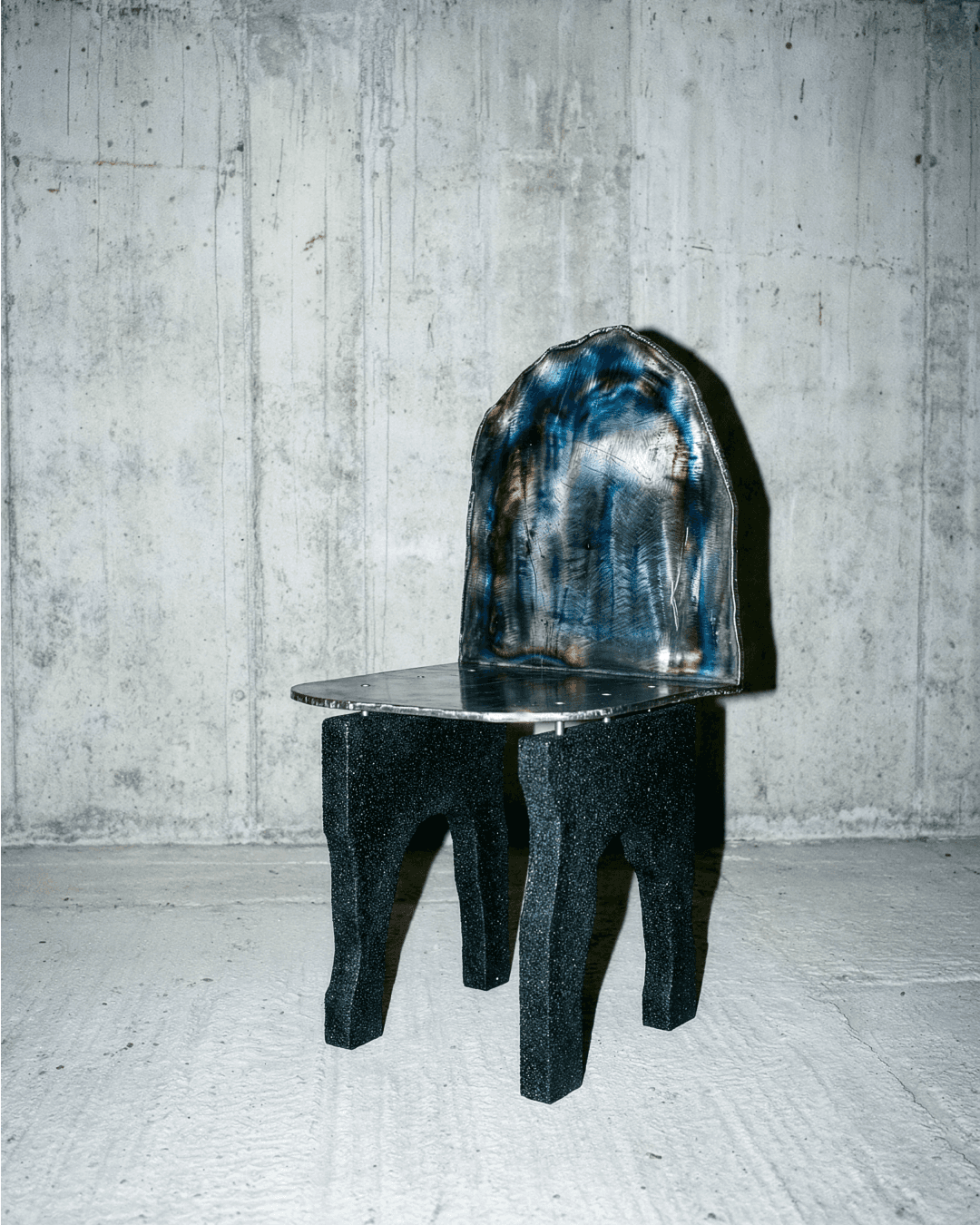
Derived from the Latin for the act of burning, USTIO refers to a process of irreversible transformation. The chair emerges from an exploration of fire as an active force, shaping matter and inscribing visible traces of heat and stress.
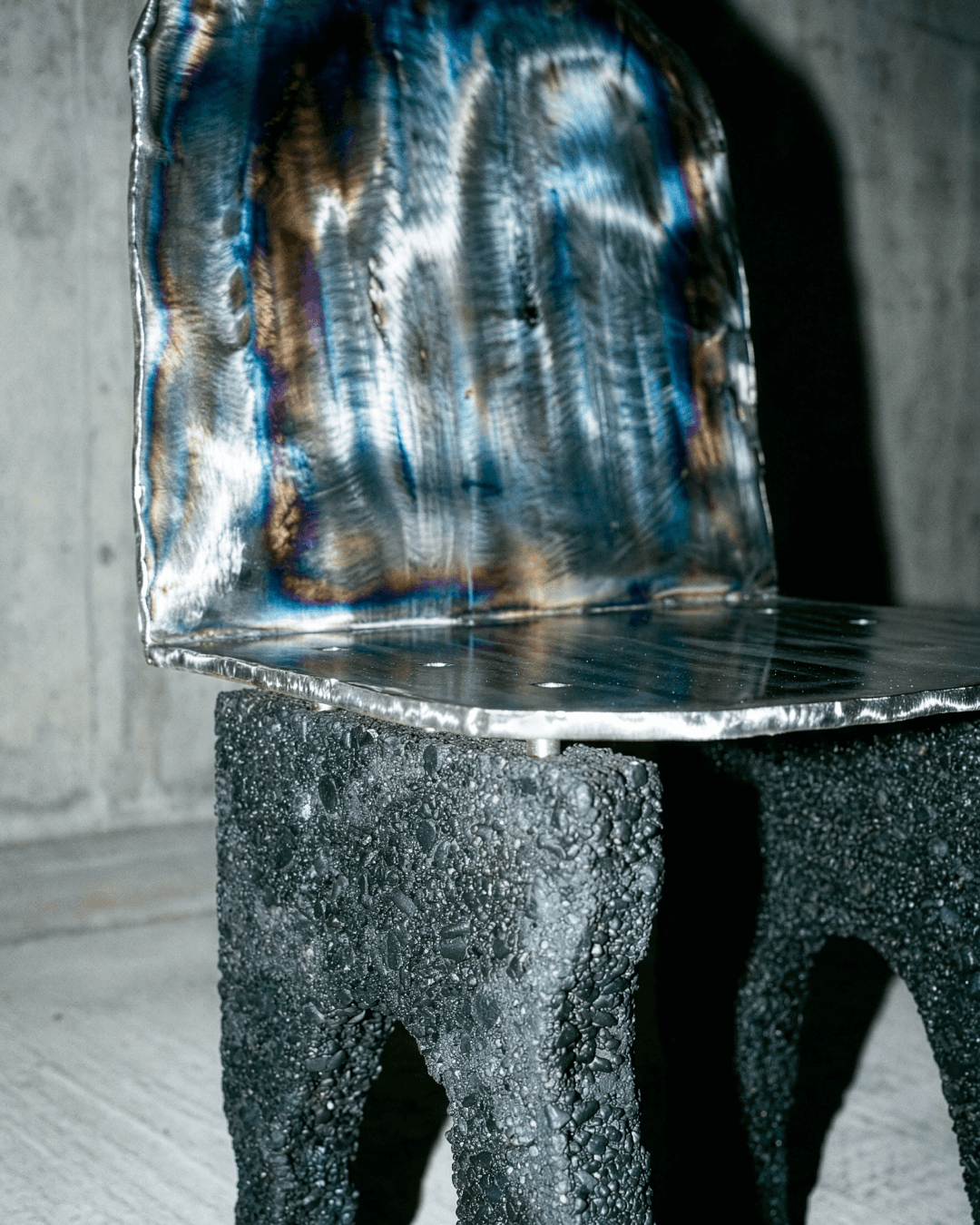
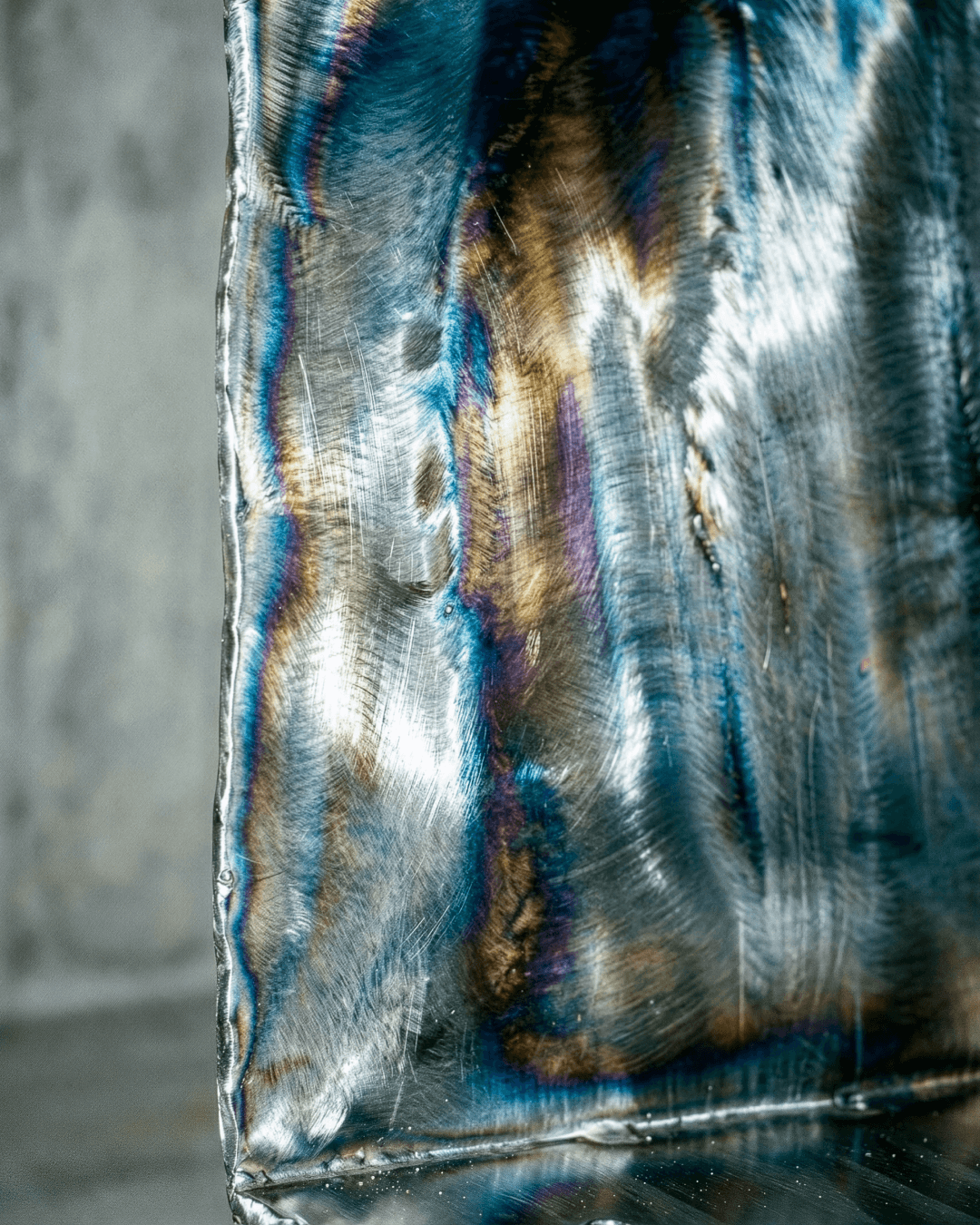
The steel structure is plasma-cut, retaining raw, irregular edges without correction. Exposed to controlled heating, the metal reacts and oxidizes, producing unstable blue tones and chromatic variations that result directly from the process. These marks are not applied, but generated through thermal transformation.
In contrast, the base is composed of a mineral composite made from sand, ashes, and reclaimed construction rubble. Dense and textured, it evokes both geological formations and architectural remains, as if extracted from a compressed landscape.
The metal and mineral elements are deliberately separated. Suspended by slender rods, the structure maintains a physical gap that introduces tension and instability. This void becomes an active component of the piece, holding forces in balance.
The USTIO collection embraces imperfection and residue as evidence of making. Fire acts as a revealer, and material retains the memory of its transformation. The chair stands as both a functional object and a record of process, where nothing is decorative and everything is consequence.
Features & material
Steel, Sand, Ashes & Wood
Dimensions
85 x 45 × 45 cm
Year
2026
Country of origin
Pantin, France
About
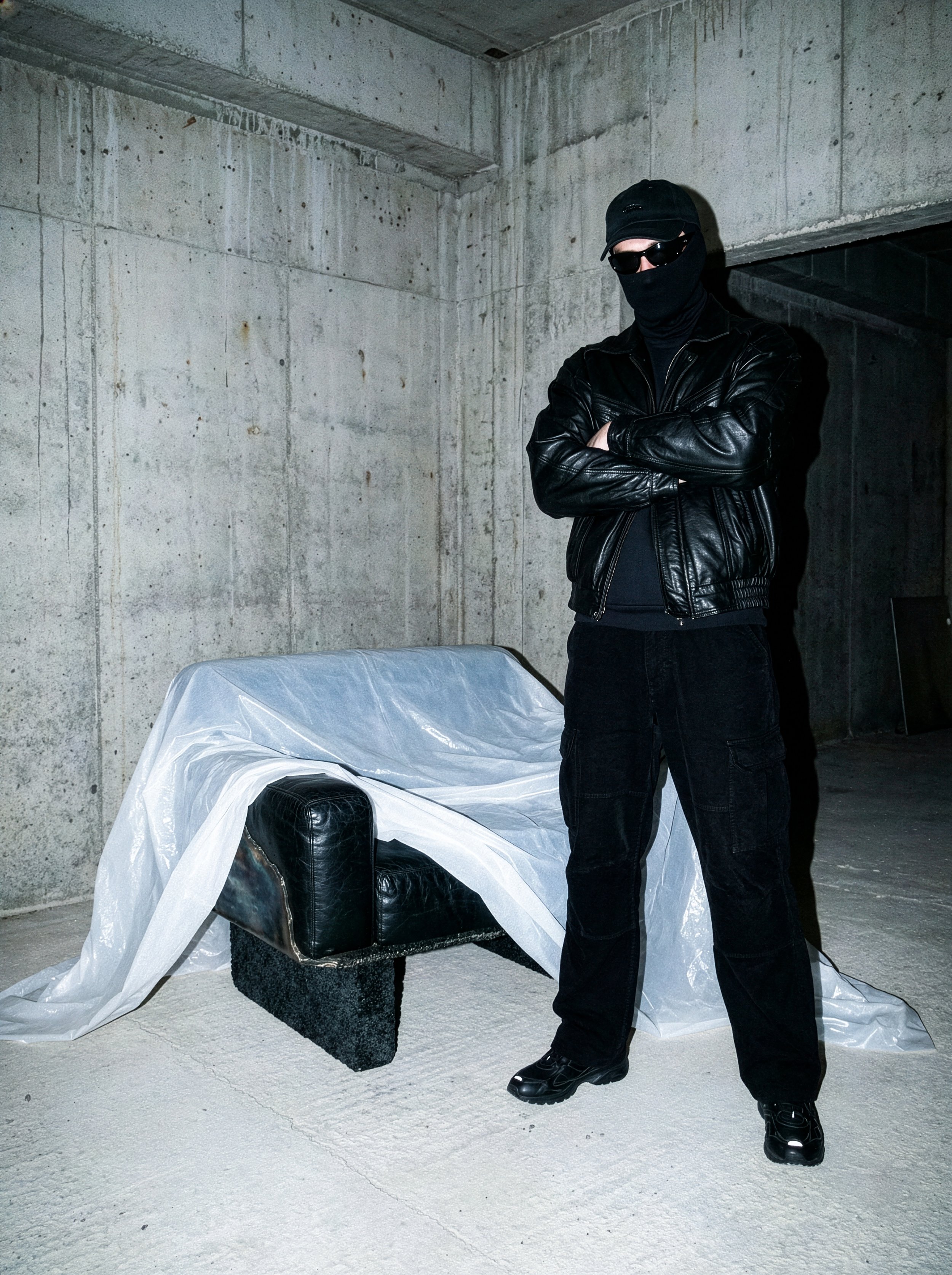
Paul Hardy is an architect and designer based in Pantin, France, working at the intersection of architecture, visual arts, and design. His practice investigates furniture as a carrier of memory, where materials shaped by use, time, and transformation become active elements of form.
Working with reclaimed and transformed matter, including sand, ashes, industrial glass, and construction debris, he develops mineral composites that embed both origin and reinvention. His pieces balance architectural rigor with instinctive making, revealing surfaces marked by tension, irregularity, and process.
Through a material-driven approach, his work explores the dialogue between structure and erosion, permanence and change, positioning design as a space where matter, gesture, and memory converge.